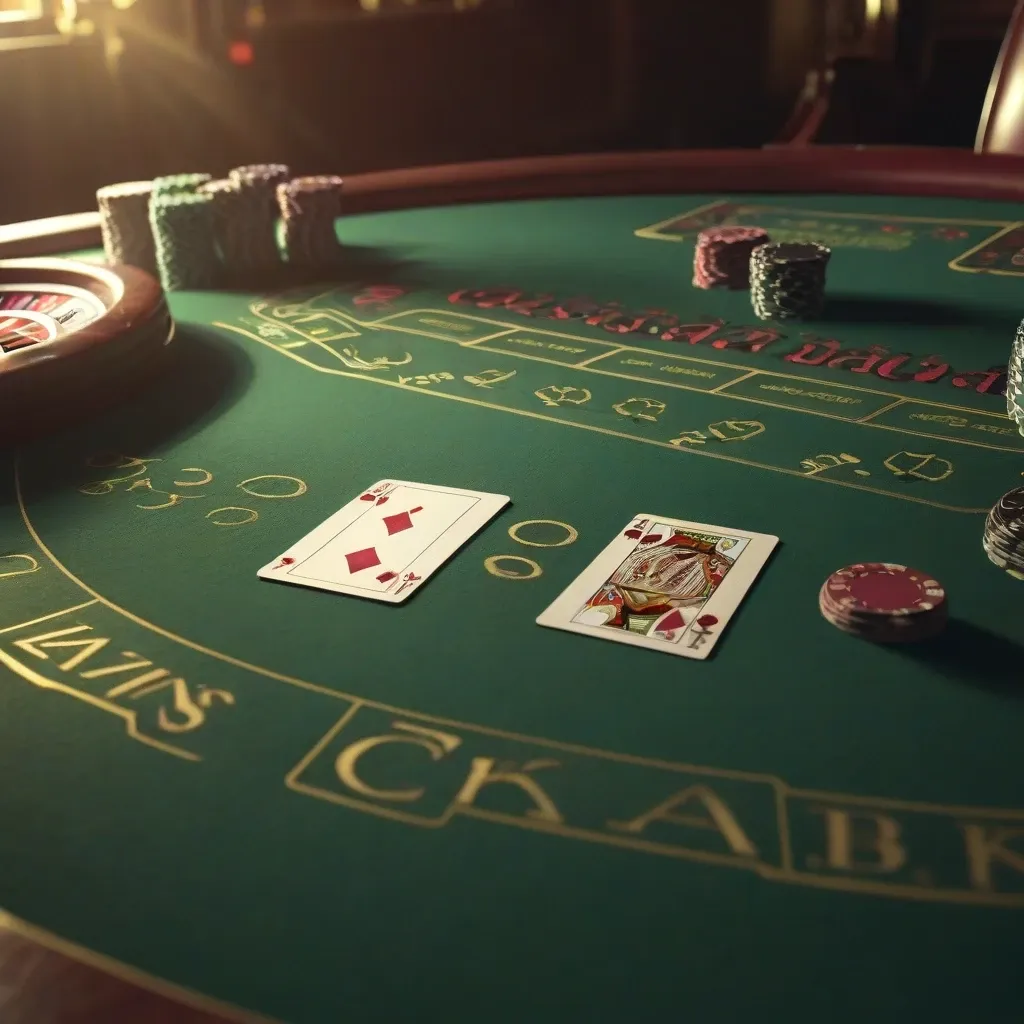
Picture this: The casino buzzes with excitement. You’re dealt an 11 against the dealer’s measly 5 in Blackjack. The obvious move, the one screamed from the very core of gambling instinct, is to double down. You confidently push forward an equal amount of chips, visualizing the payout. Then, the dealer flips a face card. Your dreams of a quick profit dissolve as quickly as the complimentary cocktail you just finished.
We’ve all witnessed (or experienced) similar scenarios. Doubling down in Blackjack can be a thrilling way to amplify winnings, but it can quickly turn sour without proper knowledge and strategy. This article serves as a guide, drawing from hands-on experience to help you navigate the treacherous waters of doubling down. You’re going to find out how to improve your Blackjack strategy. The goal is not to eliminate risk – that’s impossible in gambling – but to manage it intelligently.
Consider this your go-to guide for making informed doubling down decisions. Learn ways to avoid common pitfalls, and ultimately, tilt the odds ever so slightly in your favor. Whether you’re a seasoned gambler or a casino newbie, understanding the nuances of doubling down is crucial to having more fun. Remember, in Blackjack, knowledge truly is power, and sometimes, it’s the difference between a triumphant win and a painful lesson.
Decoding the Double Down: A Blackjack 101
In blackjack, the double down is an exciting option that allows a player to potentially maximize profits.
Doubling down means a player can double their initial bet, but it comes with a catch, the player only receives one additional card. No more, no less. After that final card is dealt, the player must stand, regardless of the hand’s total value.
So, how does a player signal their intent to double down? In a hand-held game, a player typically places the additional chips equal to their initial bet next to original bet. In a shoe game, a player places the chips in the betting circle and verbally declares “Double Down” to the dealer.
Double down is a strategic move, it’s most effective when a player has a strong starting hand, like a hard 11, or a hard 10 against a dealer’s weak upcard. It’s a calculated risk that, when used wisely, can significantly increase winnings. However, it’s important to remember that doubling down is not always the right play, and a player should consider the odds and the dealer’s upcard before making this decision.
Dealer’s Doom or Player’s Pitfall: Common Doubling Down Disasters
Doubling down in blackjack can be a thrilling move, a chance to capitalize on a favorable situation and potentially double winnings. However, it’s a double-edged sword, and far too often, players find themselves face-down in a pit of regret after a poorly timed double. Understanding whennot* to double is just as crucial as knowing when to go for it. It’s about recognizing the danger signs and avoiding common blackjack mistakes that can turn a promising hand into a costly blunder.
One frequent misstep is doubling down with a hard 12 against a dealer’s 2. The logic, or rather the misguided hope, is that the dealer is likely to bust. The reality is that a dealer’s upcard of 2 isn’t as weak as many believe. The dealer still has a reasonable chance of making a hand, and the player is stuck with a very unfavorable 12 that is likely to bust if they hit. This is a clear example of emotion overruling logic, hoping for the best instead of playing the odds.
Another problematic scenario is doubling down on a soft 19 (an Ace and an 8) against a dealer’s 6. On the surface, it might seem tempting; the dealer’s 6is* a weak upcard. However, a soft 19 is already a strong hand and doubling down significantly increases your risk for very little reward. Much better to just stand and take the win.
These bad decisions are often fueled by a misunderstanding of probabilities and expected value. Players tend to focus on immediate gratification, the potential for a quick double, rather than the long-term consequences of their choices. They see the dealer’s “weak” card and assume victory is assured, ignoring the underlying math that suggests otherwise. It’s this emotional impulse, the allure of the potential payout, that leads them astray. This is not poker, there is little room for “feeling” or “intuition”, only for facts and figures.
The ‘Chasing Losses’ Trap
Perhaps one of the most dangerous psychological traps in blackjack is ‘chasing losses.’ This is where rationality flies out the window and emotions takes over. After experiencing a few losses, players often feel an overwhelming urge to win their money back quickly. This can lead to reckless doubling down on unfavorable hands, hoping to recoup losses with a single win. Don’t play with emotion, its never a good idea to risk even more money on a bad hand simply because one has just lost a few bets, it’s a recipe for disaster.

The Highs and Lows: Quantifying the Double Down
Doubling down in blackjack is a high-stakes move, and understanding the math behind it is crucial to wielding it effectively. It’s not just about gut feelings; it’s about calculating the blackjack probability and exploiting the expected value in your favor. Expected value, simply put, is the average outcome you can expect if you make the same decision over and over again. A positive expected value means, on average, you’ll make money, while a negative one means you’ll lose.
The best doubling opportunities typically arise when you have a strong hand relative to the dealer’s upcard. For instance, a hard 11 (a hand totaling 11 without an Ace counted as 11) is prime for doubling down. Why? Because you’re overwhelmingly likely to get a ten-value card, giving you 21. Similarly, doubling down on a 10 against a dealer’s upcard of 2 through 9 is often a good bet. With soft hands, like Ace-7 (soft 18), doubling down might be advantageous against dealer upcards of 3 through 6.
Here’s a simplified illustration of expected value for doubling down in common scenarios:
| Your Hand | Dealer Upcard | Expected Value of Doubling | Reasoning |
|---|---|---|---|
| Hard 11 | 2-10, Ace | Positive | High chance of making 21; forcing dealer to beat it. |
| 10 | 2-9 | Slightly Positive | Good chance of making 20, putting pressure on the dealer to make a better hand. |
| Soft 18 (A-7) | 3-6 | Positive | Potential to improve to a strong hand against a weak dealer upcard. |
These scenarios give a mathematical advantage. Keep in mind, understanding blackjack probability isn’t a guarantee of winning every hand. Variance plays a significant role. You might double down with a positive expected value and still lose due to a bad card draw. However, in the long run, consistently making decisions with positive expected value will shift the odds in your favor and reduce the house edge.
The Illusion of Control
Many players fall into the trap of doubling down based on a “feeling” or a hunch. This “gut feeling” creates a false sense of security and often ignores the underlying misconceptions blackjack strategies are based on. While intuition can play a role in some aspects of life, doubling down in blackjack should be rooted in sound mathematical principles. Relying solely on intuition significantly increases the risk and diminishes any potential expected value in the long run.
House Rules, Huge Impact: Adapting Your Double Down Strategy
Blackjack isn’t a one-size-fits-all game. The house rules in a casino can drastically alter the odds, and a savvy player understands how to adjust their doubling strategy accordingly. Two crucial variations to look for are whether doubling after splitting (DAS) is allowed and whether the dealer hits or stands on a soft 17 (S17).
Doubling after splitting (DAS) is a game-changer. When permitted, it opens up a wealth of new doubling opportunities. Imagine you’re dealt a pair of eights against a dealer’s upcard of six. Basic strategy usually calls for splitting. If DAS is in play, and you draw a favorable card like a two or three on either of those eights, you now have the option to double down on that hand, maximizing your potential profits in advantageous situations. This rule significantly boosts a player’s expected value, so exploit it whenever possible.
The dealer’s soft 17 rule also demands attention. If the dealer hits on a soft 17 (H17), the house edge increases slightly. This means you should be a bit more aggressive with your doubling strategy. Situations where you might hesitate to double in a stand on soft 17 (S17) game become more favorable when the dealer is forced to hit. For example, doubling on an Ace-6 against a dealer’s nine becomes a more viable option in an H17 game because the dealer has a higher chance of busting.
In essence, understanding these blackjack rules variations and adapting your doubling strategy accordingly is the key to minimizing the house edge and maximizing your winnings. Pay attention to the rules and adjust your game accordingly.

Expert Insights: When to REALLY Double Down (and When to Run)
Blackjack, at its heart, is a game of calculated risks, and few decisions embody that more than the double down. While basic strategy charts offer a solid foundation, truly mastering this move requires venturing beyond the well-trodden path. It’s about recognizing those subtle shifts in the game’s momentum, those fleeting opportunities where intuition, combined with savvy, can dramatically swing the odds in your favor.
One such situation arises when you suspect the dealer’s upcard is masking a ten-value card beneath. Basic strategy might advise against doubling on a hard 11 against a dealer’s 10, but consider this: what if you’ve been meticulously tracking the cards, and the deck is rich in tens? The odds of the dealer having a 20 suddenly become significantly higher. This is where experience whispers a counterintuitive truth: doubling down here, even against conventional wisdom, becomes a calculated gamble worth taking. You’re not just hoping for a favorable card; you’re leveraging information to exploit a weakness in the dealer’s hand.
Conversely, there are moments when even a seemingly advantageous position demands restraint. Imagine holding a soft 17 (an Ace and a 6) against a dealer’s low card, like a 3. Basic strategy screams “double down!” But pause. What if the table is buzzing with chatter about how many small cards have already been dealt? The likelihood of drawing a ten plummets, and suddenly, that seemingly strong soft 17 looks a lot more vulnerable. In these instances, the wise player acknowledges the shifting landscape and opts for the guaranteed safety of a simple hit.
These nuanced plays highlight the difference between a basic player and a truly skilled blackjack strategist. It’s about understanding that the charts are merely guidelines, not unbreakable rules. The true art lies in adapting to the flow of the game, reading the subtle tells of the cards, and knowing when to confidently double down and when to strategically retreat.
Avoiding the Abyss: A Checklist for Responsible Doubling Down
Doubling down in blackjack can be exhilarating, offering the potential for significant wins. However, it can also lead to quick losses if not approached with caution and a clear strategy. Before committing to a double down, run through this quick blackjack strategy checklist to ensure you’re making a smart, informed decision.
- What’s the dealer’s upcard? Consider the likelihood of the dealer busting or making a strong hand. Avoid doubling against high dealer cards if your hand is weak.
- What’s the expected value of this double? Base your choices in simple math. Assess your odds before make a decision.
- Am I chasing losses? Doubling down to recoup previous losses is a dangerous trap. Only double when the odds are truly in your favor, regardless of your current standing.
- Do I know the house rules regarding doubling down? Some casinos restrict doubling down on certain hands.
Mastering blackjack and applying blackjack strategy checklist involves more than just knowing when to double down. Bankroll management is crucial. Set limits on your bets and stick to them, regardless of whether you’re winning or losing. Remember, disciplined play is the key to long-term success.
Most importantly, prioritize responsible gaming. If you ever feel that gambling is becoming a problem, seek help. Resources are available to provide support and guidance. Keep the game fun, and play responsibly. Enjoy the thrill of blackjack, but always within your limits.